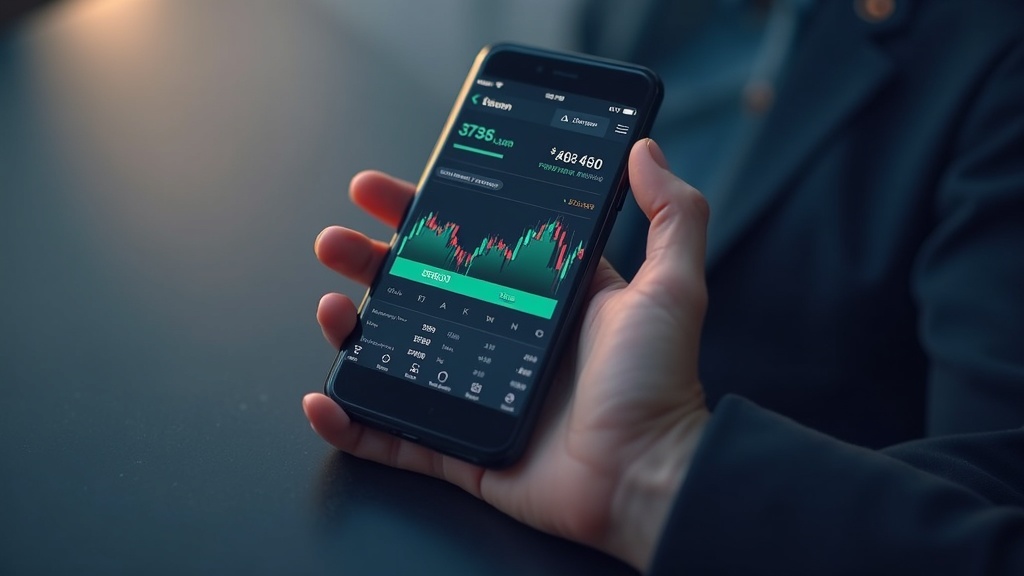
Choosing the right app for crypto trading is essential for both security and usability. This guide covers key features, regulatory considerations, and market trends to help you decide which platform suits your needs.
Table of Contents
- The Shift to Mobile Crypto Trading
- Security and Regulation: Non-Negotiables
- Key Features to Look For
- Comparing Popular Platforms
- Frequently Asked Questions
- Comparison: App Approaches
- Practical Tips for App Users
- Key Takeaways
- Sources & Citations
Quick Summary: An app for crypto trading is a mobile application that allows users to buy, sell, and manage digital assets. With over half of U.S. crypto owners using smartphones for trading, choosing a secure and regulated platform is critical. This article explains what to look for, compares popular options, and offers practical tips.
Market Snapshot
- Global cryptocurrency ownership among adults reached 6.8% in 2024, up from 4.2% in 2023, highlighting the growing addressable market for crypto trading apps (Bank for International Settlements, 2025)[1].
- About 52% of U.S. crypto owners primarily use a smartphone app to trade or manage their crypto assets (Pew Research Center, 2025)[2].
- The global cryptocurrency exchange platforms market is projected to grow from $45.7 billion in 2025 to $110.1 billion by 2030 (Fortune Business Insights, 2025)[3].
Mobile trading has transformed how people interact with digital currencies. An app for crypto trading puts the market in your pocket, but not all apps are created equal. The surge in mobile usage – over 80% of Coinbase’s active retail customers now access the platform primarily through its mobile app (Coinbase Global, Inc., 2026)[4] – means that users need to be discerning about security, fees, and features. This article breaks down the essential considerations for choosing a reliable app and provides actionable guidance for both beginners and experienced traders.
The Shift to Mobile Crypto Trading
The move toward mobile-first trading is one of the most significant trends in the crypto industry. In 2025, about 68% of downloads for major exchange apps like Coinbase, Binance, and Kraken came from Android users (Sensor Tower, 2026)[5]. This shift is driven by convenience: users can monitor prices, execute trades, and manage portfolios anywhere. Roughly 60% of crypto investors aged 18–34 trade mainly via mobile apps rather than desktop platforms (Gemini, 2026)[6].
Eswar Prasad, Professor of Trade Policy at Cornell University, notes that “mobile-based crypto trading apps have lowered the barriers to entry so much that the key challenge now is not access, but ensuring users understand the extreme volatility and risks they are taking on”[7]. This sentiment is echoed by data.ai, which reported a 22% year-over-year increase in average daily time spent in leading crypto trading apps in Q4 2025[8]. As the market matures, the app for crypto trading has become the primary interface for millions.
Security and Regulation: Non-Negotiables
When selecting an app for crypto trading, security should be the top priority. Lisa Bragança, former SEC Branch Chief, advises that “if you’re choosing an app for crypto trading, the single most important factor is whether the firm is properly registered and subject to oversight in your jurisdiction”[9]. This is critical because unregulated platforms may lack investor protections.
Approximately 41% of U.S. adults who have never invested in crypto cite security concerns with apps and exchanges as a primary reason for staying out of the market (Morning Consult, 2026)[10]. To mitigate risks, look for apps that offer two-factor authentication (2FA), cold storage for funds, and insurance against hacks. Regulated exchanges like Coinbase and Kraken provide these safeguards, while some newer apps may not. Alyssa Choo, Crypto Research Analyst at Morningstar, emphasizes that “using a regulated exchange’s mobile app is the safest on-ramp into crypto markets”[11].
Key Features to Look For
Not all apps offer the same functionality. A good app for crypto trading should include essential features like real-time price charts, limit and market orders, and support for a wide range of cryptocurrencies. Changpeng Zhao, founder of Binance, explains that a great app “has to balance powerful order types and deep liquidity with a clean interface”[12].
Other important features include low trading fees, fast deposit and withdrawal options, and educational resources for beginners. Some apps also offer staking and lending services, which can generate passive income. According to a report from Binance Research, trading volume executed through Binance’s mobile apps accounted for approximately 70% of its spot and derivatives volume in 2025[13], underscoring the importance of mobile-friendly design.
Comparing Popular Platforms
Several major exchanges dominate the mobile trading landscape. Coinbase is known for its user-friendly interface and strong regulatory compliance, making it ideal for beginners. Binance offers lower fees and a vast selection of altcoins, but its regulatory status varies by country. Kraken is praised for its security and advanced trading tools, while Crypto.com provides a comprehensive ecosystem with a Visa card and staking rewards.
Each platform has trade-offs. For example, Coinbase charges higher fees than Binance, but it is listed on the Nasdaq and subject to SEC oversight. Marcus Hughes of Coinbase notes that “over 80% of our active retail customers now primarily access Coinbase through our mobile app”[14], reflecting the platform’s mobile-first strategy. Users should compare fee schedules, supported coins, and security features before committing.
Important Questions About App for Crypto Trading
What is the safest app for crypto trading?
The safest apps are those operated by regulated exchanges like Coinbase, Kraken, or Gemini. These platforms are subject to government oversight, offer insurance on digital assets, and implement robust security measures like cold storage and two-factor authentication. Always verify that the app is registered with financial authorities in your country before depositing funds.
Are crypto trading apps free to use?
Most apps are free to download, but they charge fees for transactions. These include trading fees (often a percentage of the trade value), deposit/withdrawal fees, and spread costs. Some apps offer zero-fee trading for certain pairs or during promotional periods. Always review the fee schedule before trading.
Can I trade all cryptocurrencies on a single app?
No single app supports every cryptocurrency. Major exchanges like Binance and Coinbase list hundreds of coins, but smaller or newer tokens may only be available on decentralized exchanges (DEXs) accessed via mobile wallets. If you need a wide selection, choose an app with a large number of listed assets, but be aware that more listings can mean higher risk.
How do I protect my account on a crypto trading app?
Enable two-factor authentication (2FA) using an authenticator app rather than SMS. Use a strong, unique password and never share your login credentials. Consider withdrawing large amounts to a hardware wallet for long-term storage. Be wary of phishing scams and only download apps from official app stores.
Comparison: App Approaches
Different apps cater to different user needs. The table below compares three common approaches to mobile crypto trading, highlighting their strengths and weaknesses.
| Approach | Best For | Example App | Key Trade-off |
|---|---|---|---|
| Centralized Exchange (CEX) App | Beginners and casual traders | Coinbase | Higher fees but strong security and regulation |
| Decentralized Exchange (DEX) via Mobile Wallet | Privacy-focused users | Uniswap (via MetaMask) | Full control but higher complexity and gas fees |
| Social Trading App | Copy traders and learners | eToro | Easy to follow experts but limited coin selection |
Each approach has its place. For most users, a regulated CEX app offers the best balance of security and usability. However, experienced traders may prefer DEXs for access to DeFi tokens. Social trading apps are useful for those who want to learn by copying successful traders.
Practical Tips for App Users
To get the most out of your app for crypto trading, follow these actionable tips:
- Start small: Deposit only what you can afford to lose while you learn the platform’s interface and fee structure.
- Use limit orders: Instead of market orders, set limit orders to control the price at which you buy or sell, avoiding slippage during volatile periods.
- Diversify across apps: Don’t keep all your funds in one app. Use a regulated app for daily trading and a hardware wallet for long-term storage.
- Stay updated: Enable push notifications for price alerts and security updates. Follow official social media channels for announcements about new features or potential issues.
These practices can help reduce risk and improve your trading experience.
For more about App for crypto trading, see discover app for crypto trading insights.
Key Takeaways
Choosing the right app for crypto trading requires careful consideration of security, regulation, fees, and features. With mobile trading now the norm – 52% of U.S. crypto owners use apps (Pew Research Center, 2025)[2] – it’s essential to select a platform that meets your needs. Start with a regulated app like Coinbase or Kraken, enable strong security measures, and never invest more than you can afford to lose.
Sources & Citations
- Bank for International Settlements. Cryptocurrency ownership among adults, 2025.
https://www.bis.org/publ/bppdf/bispap152.pdf - Pew Research Center. Americans’ experiences with cryptocurrencies, NFTs and Web3, 2025.
https://www.pewresearch.org/internet/2025/12/14/americans-experiences-with-cryptocurrencies-nfts-and-web3 - Fortune Business Insights. Cryptocurrency exchange platforms market, 2025.
https://www.fortunebusinessinsights.com/cryptocurrency-exchange-platform-market-108646 - Coinbase Global, Inc. Shareholder letter Q1 2026.
https://investor.coinbase.com/static-files/coinbase-shareholder-letter-q1-2026.pdf - Sensor Tower. Crypto trading app download trends, 2025.
https://sensortower.com/blog/crypto-trading-app-download-trends-2025 - Gemini. Global state of crypto, 2026.
https://www.gemini.com/research/global-state-of-crypto-2026 - NPR. The risks retail investors face as crypto trading goes mobile, 2026.
https://www.npr.org/2026/05/09/crypto-retail-investors-mobile-trading-risks - data.ai. 2025 finance and trading apps report.
https://www.data.ai/en/insights/market-data/2025-finance-and-trading-apps-report - CNBC. What to check before you download a crypto trading app, according to lawyers, 2026.
https://www.cnbc.com/2026/04/03/how-to-choose-a-crypto-app-according-to-securities-lawyers.html - Morning Consult. Why many Americans still avoid crypto, 2026.
https://morningconsult.com/2026/03/04/why-many-americans-still-avoid-crypto - Morningstar. 2026 crypto landscape: What retail investors need to know.
https://www.morningstar.com/markets/cryptocurrency/crypto-landscape-retail-investors-2026 - CoinDesk. Binance founder on what makes a great crypto trading experience, 2026.
https://www.coindesk.com/policy/2026/01/12/binance-founder-on-future-of-crypto-trading-apps - Binance Research. 2025 trading behavior report.
https://research.binance.com/en/analysis/binance-2025-trading-behavior-report - Reuters. Coinbase aims to simplify crypto investing as mobile usage surges, 2026.
https://www.reuters.com/technology/coinbase-aims-simplify-crypto-investing-mobile-usage-surges-2026-02-07