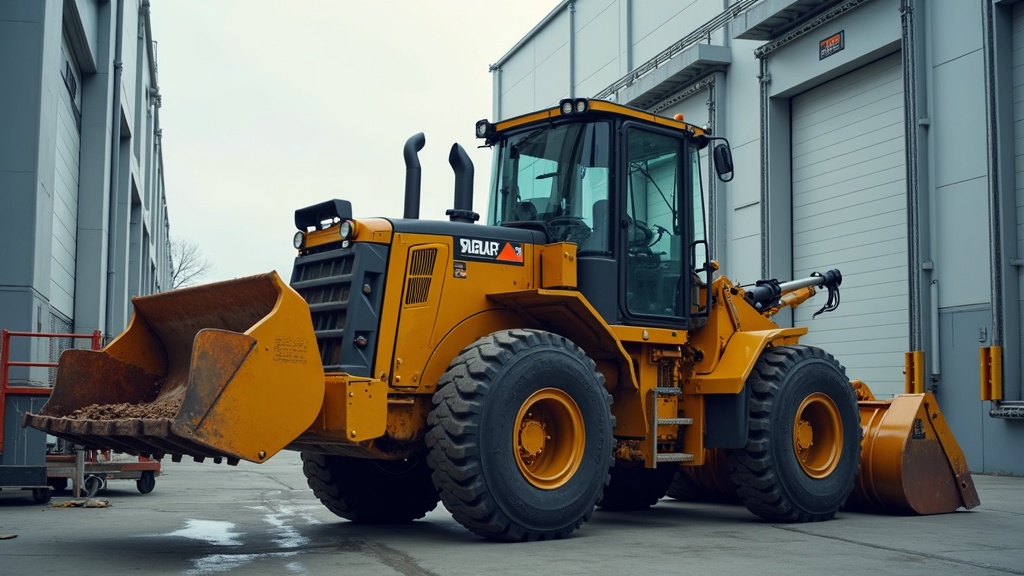
The global heavy equipment market is expanding rapidly due to urbanization and major infrastructure projects. Discover key trends, statistics, and future growth.
Table of Contents
- Key Takeaway
- Quick Stats
- Introduction
- Global Demand
- Technological Innovations
- The Shift Toward Electrification
- Rental Strategies
- Questions from Our Readers
- Comparing Acquisition Methods
- Practical Tips
- Final Thoughts
- Further Reading
For more about Heavy equipment, see see how heavy equipment works.
Key Takeaway
Heavy equipment is large machinery used for executing construction, mining, and earthmoving tasks. Driven by global urbanization and infrastructure development, this sector is rapidly adopting automation, electrification, and telematics to improve fleet optimization and reduce operational emissions across diverse industrial applications.
Quick Stats: Heavy Equipment
- Estimated global market size in 2024: $202.84 billion (InsightAce Analytic, 2024)[1].
- Projected global market size by 2034: $333.52 billion (InsightAce Analytic, 2024)[1].
- Asia Pacific share of global market value: 36.8% (MarketsandMarkets, 2025)[2].
- U.S. construction machinery manufacturing employment: 259,000 workers (Association of Equipment Manufacturers, 2025)[3].
Introduction
Heavy equipment forms the backbone of modern infrastructure, mining, and large-scale earthmoving projects. From excavators and bulldozers to cranes and loaders, these powerful machines enable the physical development of cities, transportation networks, and industrial facilities. As global populations grow and urban centers expand, the reliance on robust construction equipment has never been more pronounced.
The industry is currently undergoing a significant transformation. Manufacturers and operators are moving beyond traditional hydraulic systems to embrace digital connectivity, alternative powertrains, and advanced automation. This evolution is driven by the need for higher productivity, stricter environmental regulations, and a shrinking pool of skilled operators. In this article, we will explore the primary market drivers, technological innovations, electrification trends, and shifting acquisition strategies that are reshaping the heavy machinery landscape.
Global Demand for Heavy Equipment
The global market for heavy construction machinery is experiencing robust growth, fueled by massive public and private investments in physical infrastructure. Governments worldwide are prioritizing the modernization of aging transportation networks, while developing nations are building new cities and industrial zones from the ground up. This surge in activity requires a continuous supply of reliable heavy-duty equipment to meet aggressive project timelines.
Emerging economies play a pivotal role in this expansion. As Tinatin Bregadze, Research Analyst at InsightAce Analytic, notes, “Increasing urbanization, massive infrastructure projects, and rapid industrialization in emerging economies are propelling the demand for heavy construction equipment worldwide” (InsightAce Analytic, 2024)[1]. The Asia Pacific region currently leads this charge, accounting for a substantial portion of global revenue due to rapid development in countries like China and India.
To capitalize on this growing demand, manufacturers are leveraging advanced digital marketing and AI-powered search engine optimization to reach global buyers more effectively. By understanding regional search behaviors and infrastructure spending patterns, companies can align their production schedules with localized market needs, ensuring that the right machines reach the right job sites at the optimal time.
Technological Innovations in Heavy Equipment
Modern job sites are increasingly defined by data rather than just diesel and steel. The integration of telematics and connected sensors has fundamentally changed how contractors manage their fleets. Today, heavy earthmoving equipment is equipped with digital systems that monitor engine health, track fuel consumption, and record operator behavior in real time.
This connectivity transforms isolated machines into intelligent assets. According to Chris Sleight, Managing Director at Off-Highway Research, telematics and connected technologies enable far better fleet optimization and predictive maintenance by turning machines into nodes within a broader data-rich ecosystem (Off-Highway Research, 2025)[4]. Predictive maintenance algorithms analyze vibration and temperature data to forecast component failures before they cause costly downtime.
Safety remains a paramount concern alongside efficiency. Organizations dedicated to occupational health continuously update their protocols to protect workers around automated machinery. Reviewing comprehensive construction safety and health research helps site managers implement geofencing and proximity detection systems, ensuring that heavy construction machinery operates safely alongside ground personnel.
The Shift Toward Electrification
Environmental regulations and corporate sustainability goals are accelerating the transition away from traditional internal combustion engines. Electrification is no longer limited to compact machines; it is rapidly expanding into larger, more demanding equipment classes. Battery-electric and hydrogen fuel cell technologies are being developed to power heavy-duty equipment without sacrificing torque or operational endurance.
Industry leaders recognize that this transition is mandatory for future competitiveness. Ken Monahan, Vice President at the Association of Equipment Manufacturers, states that members are investing heavily in automation and alternative powertrains because the next generation of machines must deliver higher productivity with lower emissions (Association of Equipment Manufacturers, 2025)[3]. Electric excavators and loaders are particularly advantageous in urban environments and underground mining operations, where zero tailpipe emissions and reduced noise levels are critical.
However, the shift requires significant infrastructure upgrades. Job sites must be equipped with high-capacity charging stations, and power grids must be stabilized to handle the immense energy draw of charging multiple large batteries simultaneously. Despite these hurdles, the long-term savings in fuel and maintenance make electrification a highly attractive prospect for forward-thinking contractors.
Heavy Equipment Rental Strategies
The traditional model of purchasing and holding machinery for decades is giving way to more flexible acquisition methods. The high capital expenditure required to buy new machines, combined with the rapid pace of technological obsolescence, has made renting an increasingly popular choice. Contractors now prefer to access the latest technology on a per-project basis rather than tying up capital in depreciating assets.
This shift in mindset is reshaping the financial strategies of construction firms. Nakul Jain, Senior Research Consultant at Mordor Intelligence, explains that rental is now the default strategy for many contractors to access the latest technology without the balance-sheet burden of ownership (Mordor Intelligence, 2025)[5]. Rental companies benefit from this trend by maintaining diverse, modern fleets that appeal to a wide range of industrial clients.
Specialized applications also drive the rental market. For instance, when dealing with complex tunneling or dam stabilization tasks, contractors often rent highly specific machinery rather than purchasing it. Consulting a specialized concrete grout mixing guide ensures that teams select the exact colloidal mixing equipment required for unique subterranean environments, optimizing both rental costs and project outcomes.
Questions from Our Readers
What is the primary driver of global construction equipment demand?
The primary driver is rapid urbanization and massive infrastructure development, particularly in emerging economies. As populations migrate to cities, governments and private developers must build new transportation networks, housing, and industrial facilities. This continuous cycle of physical development requires a steady supply of excavators, loaders, and cranes to meet aggressive construction timelines and support economic growth.
How does telematics improve fleet optimization?
Telematics utilizes connected sensors and GPS to transmit real-time data regarding machine location, fuel consumption, and engine health. Fleet managers use this data to identify idle times, optimize routing, and schedule predictive maintenance before critical components fail. This reduces unexpected downtime, lowers fuel costs, and extends the overall operational lifespan of the machinery.
Is electric heavy equipment viable for large-scale projects?
Yes, but its viability depends on the specific application and available infrastructure. Electric machines are highly effective in urban settings and underground mining where emissions and noise must be minimized. However, for remote, large-scale earthmoving projects, the lack of high-capacity charging infrastructure and the current limitations of battery energy density mean that diesel or hybrid machines remain the more practical choice.
Why do contractors prefer renting over purchasing?
Renting allows contractors to access the newest, most efficient technology without the massive upfront capital expenditure required for purchasing. It also eliminates the long-term costs associated with storage, insurance, and major repairs. By renting, companies avoid the balance-sheet burden of depreciating assets and can easily scale their fleet size up or down based on current project demands.
Comparing Acquisition Methods
Choosing the right method to acquire heavy equipment depends on a company’s financial health, project duration, and technological requirements. Each approach offers distinct advantages and drawbacks that impact long-term profitability and operational flexibility.
| Method | Heavy Equipment Access | Financial Impact |
|---|---|---|
| Purchasing | Full ownership and customization | High upfront capital; long-term asset depreciation |
| Renting | Short-term access to latest models | Higher daily rates; no maintenance or storage costs |
| Leasing | Medium-term use with upgrade options | Predictable monthly payments; avoids large down payments |
Practical Tips for Fleet Management
Managing a modern fleet requires a balance of technical oversight and human resource management. Implementing the following best practices can significantly improve job site efficiency and machine longevity:
- Implement Predictive Maintenance: Utilize telematics data to monitor hydraulic system pressures and engine temperatures. Addressing minor anomalies before they escalate prevents catastrophic failures and keeps machines operational.
- Optimize Operator Training: Advanced automation requires skilled operators. Invest in continuous training programs to ensure staff can fully utilize digital interfaces and semi-autonomous features safely.
- Prioritize Operator Well-being: Managing operator fatigue is crucial for safety and productivity. Exploring the clinical applications of laughter therapy and other stress-reduction techniques can offer unexpected insights into maintaining mental health and focus on demanding, high-pressure job sites.
- Right-Size Your Fleet: Avoid the temptation to use oversized machinery for minor tasks. Matching the machine’s capacity to the specific task reduces fuel consumption and minimizes ground compaction.
Final Thoughts on Heavy Equipment
The landscape of heavy equipment is evolving rapidly, driven by global infrastructure demands, digital connectivity, and the urgent need for sustainable powertrains. As manufacturers continue to innovate, contractors who embrace telematics, electrification, and flexible rental strategies will secure a distinct competitive advantage. Staying informed about these technological shifts is essential for long-term success in the construction and mining sectors. For more insights on leveraging digital tools to grow your industrial business, explore our guide on AI-driven search optimization strategies.
Further Reading
- Heavy Construction Equipment Market Size, Share & Trends Analysis Report, 2024-2034. InsightAce Analytic.
https://www.insightaceanalytic.com/report/heavy-construction-equipment-market-/2254 - Heavy Construction Equipment Market by Equipment Type, Application and Region – Global Forecast to 2030. MarketsandMarkets.
https://www.marketsandmarkets.com/Market-Reports/heavy-construction-equipment-market-1211.html - New Trends in the U.S. Construction Machinery Industry. Association of Equipment Manufacturers (AEM).
https://www.linkedin.com/pulse/straight-from-source-new-trends-us-construction-machinery-hbnnc - The 10 Biggest Trends Transforming Construction Equipment. Off-Highway Research.
https://www.youtube.com/watch?v=EzYwssoFX4M - Construction Equipment Market – Growth, Trends, and Forecasts (2024 – 2031). Mordor Intelligence.
https://www.mordorintelligence.com/industry-reports/construction-equipment-market