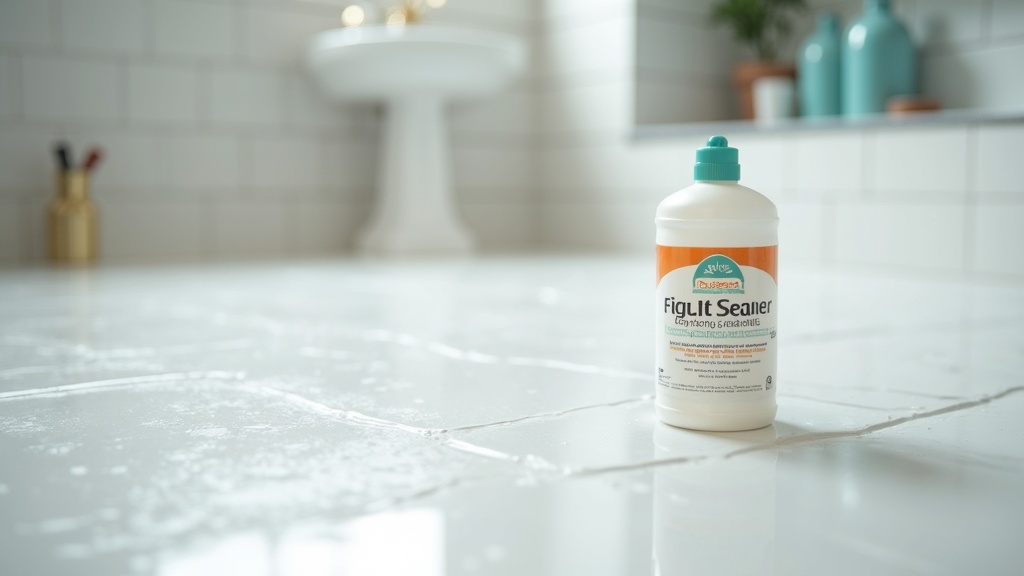
Grout sealer plays a critical role in maintaining the integrity of cementitious and chemical grout applications in mining and tunneling. This technical guide covers selection criteria, application methods, and maintenance best practices for industrial environments.
Table of Contents
- What Is Grout Sealer?
- Industrial Applications in Mining and Tunneling
- Selection Criteria for High-Performance Sealers
- Application and Maintenance Best Practices
- Frequently Asked Questions
- Sealer Types Comparison
- Practical Tips for Engineers
- Key Takeaways
Quick Stats: Grout Sealer
- The global grout sealer market was valued at 1.12 billion USD in 2024 (Growth Market Reports, 2024)[1].
- The tile and grout sealer market is projected to grow at a compound annual growth rate of 5% from 2025 to 2033 (Archive Market Research, 2025)[2].
- Northern America tile sealants grout market volume is expected to grow 3-5% per year through 2035 (IndexBox, 2025)[3].
In mining and tunneling operations, the integrity of grout applications directly impacts structural stability and groundwater control. Grout sealer is not merely a finishing touch but a critical component that ensures long-term performance of cementitious and chemical grouts in demanding subsurface environments. This guide provides a comprehensive overview of grout sealer selection, application, and maintenance for industrial applications.
What Is Grout Sealer?
Grout sealer is a specialized chemical formulation applied to cured grout surfaces to reduce porosity, improve chemical resistance, and prevent water ingress. In mining and tunneling contexts, sealers are used on both cementitious grouts used for rock consolidation and chemical grouts employed for water cutoff. The primary function is to create a barrier that protects the grout matrix from degradation caused by groundwater chemistry, mineral-laden water, and physical abrasion.
Key Properties of Industrial Grout Sealers
Industrial-grade grout sealers differ significantly from consumer products. They are formulated to withstand high hydrostatic pressures, aggressive chemical environments, and temperature fluctuations common in underground operations. Penetrating sealers, which soak into the grout pores and react to form a hydrophobic barrier, are preferred for most mining applications. Film-forming sealers, while effective in some scenarios, may delaminate under high pressure or in wet conditions. The choice between reactive penetrating sealers and surface film sealers depends on site-specific conditions including water chemistry, grout type, and expected service life.
Industrial Applications in Mining and Tunneling
Grout sealer finds extensive use in several critical mining and tunneling applications where water control and structural integrity are paramount. In underground mining, sealers are applied to shotcrete and grouted rock bolts to prevent corrosion and maintain load-bearing capacity. Tunnel linings, particularly in water-bearing ground, require sealers to prevent groundwater infiltration that can lead to structural deterioration and increased pumping costs.
Water Cutoff and Ground Stabilization
In tunneling projects encountering high groundwater inflows, grout curtains are installed to reduce permeability. The application of a grout sealer to these curtains enhances their effectiveness by filling micro-cracks and ensuring long-term hydraulic isolation. Similarly, in raise boring and shaft sinking operations, sealers protect grouted annuli from degradation caused by aggressive mine waters containing sulfates, chlorides, or low pH. The Tile Club editorial team notes that while sealing grout as soon as you install your tile is the best way to protect your investment, it is never too late to seal old grout to avoid future damages (Tile Club, 2024)[4].
Infrastructure Protection
Underground infrastructure such as pumping stations, crusher chambers, and conveyor tunnels benefit from regular sealer application. The sealer prevents water migration through grouted joints and cracks, reducing corrosion of embedded steel and maintaining structural integrity. In these applications, the sealer acts as both a protective coating and a maintenance tool that extends the interval between major rehabilitation works.
Selection Criteria for High-Performance Sealers
Selecting the appropriate grout sealer for mining and tunneling applications requires careful evaluation of several technical parameters. The sealer must be compatible with the grout type, whether cementitious, epoxy, or polyurethane-based. Penetrating sealers based on silanes, siloxanes, or silicones are generally preferred for cementitious grouts due to their ability to react with the substrate and form a durable hydrophobic layer.
Chemical and Physical Requirements
Industrial sealers must demonstrate resistance to the specific chemical environment of the mine or tunnel. This includes resistance to acidic mine drainage, high chloride concentrations, and hydrocarbon contamination. The sealer should also maintain its protective properties under cyclic wetting and drying conditions, as well as freeze-thaw cycles in cold climate operations. Penetration depth, typically measured in millimeters, is a key performance indicator; deeper penetration generally correlates with longer service life.
Application Conditions
The application method and curing conditions significantly influence sealer performance. Spray-applied sealers offer rapid coverage for large surface areas, while brush or roller application may be preferred for detailed work on irregular surfaces. Temperature and humidity at the time of application affect curing rates and final properties. For underground applications where ventilation may be limited, low-VOC formulations are essential to maintain air quality and worker safety.
Application and Maintenance Best Practices
Proper application of grout sealer is essential for achieving the desired performance in mining and tunneling environments. Surface preparation is the most critical step: the grout surface must be clean, dry, and free from laitance, oil, or other contaminants. For existing installations, pressure washing or mechanical abrasion may be necessary to expose sound grout. The CTASC expert answers contributor advises that typically you need to reseal every 6 months to a year (CTASC, 2024)[5], though industrial environments may require more frequent inspection.
Inspection and Reapplication Schedules
Regular inspection of sealed grout surfaces is necessary to identify areas where the sealer has degraded. The water drop test is a simple field method: if water is absorbed and completely disappears into the grout, it is time for a reseal (Tile Club, 2024)[4]. In aggressive mining environments, more frequent inspection may be warranted. The Tile Council of North America recommends that grout be sealed every two years at the outside (Tile Club, 2024)[4], though this recommendation is for consumer applications; industrial users should establish site-specific schedules based on water chemistry and operational conditions.
Integration with Grouting Programs
Grout sealer application should be integrated into the overall grouting program from the design stage. For critical applications such as permanent tunnel linings or water cutoff curtains, the sealer specification should be included in the project quality plan. The CTASC expert answers contributor notes that while it is not mandatory, sealing cementitious grouts is always recommended because it makes them more stain resistant and easier to maintain (CTASC, 2024)[5].
Important Questions About Grout Sealer
How often should grout sealer be reapplied in mining environments?
In mining and tunneling environments, reapplication frequency depends on water chemistry, abrasion, and exposure conditions. The CTASC expert answers contributor indicates a typical residential reseal interval of six months to a year (CTASC, 2024)[5], but industrial applications may require more frequent inspection and reapplication. The Tile Council of North America recommends sealing every two years at the outside for consumer applications (Tile Club, 2024)[4]. For underground operations, quarterly inspections using the water drop test are advisable to determine actual reapplication needs.
Can grout sealer be applied to old or existing grout installations?
Yes, grout sealer can be applied to existing grout installations. The Tile Club editorial team confirms that it is never too late to seal old grout to avoid future damages (Tile Club, 2024)[4]. Proper surface preparation is essential for old installations: the grout must be thoroughly cleaned to remove dirt, oils, and degraded material. In mining applications, pressure washing or mechanical cleaning may be required to ensure the sealer can penetrate effectively. The sealer will not restore grout that has already physically deteriorated, but it will protect remaining sound grout from further degradation.
Is grout sealer necessary for all types of grout used in tunneling?
While not mandatory for all applications, grout sealer is strongly recommended for cementitious grouts used in tunneling. The CTASC expert answers contributor states that while it is not mandatory, sealing cementitious grouts is always recommended because it makes them more stain resistant and easier to maintain (CTASC, 2024)[5]. For chemical grouts such as polyurethanes or epoxies, the need for a sealer depends on the specific product formulation and exposure conditions. In water-bearing ground or chemically aggressive environments, sealing all grout types is a conservative best practice to ensure long-term performance.
What is the difference between penetrating and film-forming grout sealers?
Penetrating sealers soak into the grout pores and react chemically to form a hydrophobic barrier within the grout matrix. They do not change the surface appearance and are resistant to abrasion because the protection is internal. Film-forming sealers create a visible coating on the grout surface. In mining and tunneling, penetrating sealers are generally preferred because they can withstand high hydrostatic pressures and physical abrasion without delaminating. Film-forming sealers may be suitable for low-traffic, dry areas but are less reliable in wet or abrasive underground conditions.
Sealer Types Comparison
Choosing between different grout sealer types requires understanding their performance characteristics in industrial environments. The table below compares the three main categories of sealers used in mining and tunneling applications.
| Sealer Type | Penetration Depth | Chemical Resistance | Best Application |
|---|---|---|---|
| Silane/Siloxane Penetrating | 2-5 mm | Excellent against chlorides and sulfates | Cementitious grouts in water-bearing ground |
| Silicone-Based Penetrating | 1-3 mm | Good against general groundwater | Shotcrete and rock bolt grouting |
| Acrylic Film-Forming | Surface only | Moderate; degrades with UV and abrasion | Dry, low-traffic areas above ground |
Practical Tips for Engineers
Implementing an effective grout sealer program in mining and tunneling operations requires attention to several practical details. First, always conduct a site-specific water chemistry analysis before selecting a sealer formulation. The presence of aggressive ions such as sulfates or chlorides will influence both the sealer type and the required application rate. Second, establish a baseline for sealer performance by conducting water absorption tests on test panels before full-scale application. This data helps in setting realistic inspection intervals and reapplication schedules.
Third, consider the application method carefully. For large tunnel sections, airless spray equipment provides consistent coverage at high productivity rates. For detailed work around penetrations and joints, brush application ensures complete coverage. Fourth, integrate grout sealer application into the project quality control documentation. This includes recording application rates, curing conditions, and inspection results. Finally, train site personnel in proper application techniques and inspection methods. The water drop test is simple but effective; ensure all inspectors can perform and interpret it correctly. For more detailed guidance on grouting practices, refer to the grout sealer technical resources available from industry specialists.
Key Takeaways
Grout sealer is an essential component of durable grout installations in mining and tunneling. Proper selection based on site chemistry, careful application with attention to surface preparation, and regular inspection using simple field tests ensure long-term performance. The growing market for these products, valued at 1.12 billion USD in 2024 (Growth Market Reports, 2024)[1], reflects their importance in infrastructure protection. For engineers and project managers, integrating sealer specifications into project designs and maintenance plans is a cost-effective strategy for extending the service life of underground works. To explore advanced sealer formulations and application techniques, visit the clinical applications of laughter therapy resource page.
Further Reading
- Growth Market Reports. Grout Sealer Market Report 2024.
https://growthmarketreports.com/report/grout-sealer-market - Archive Market Research. Tile and Grout Sealer Market Analysis 2025.
https://www.archivemarketresearch.com/reports/tile-grout-sealer-384877 - IndexBox. Northern America Tile Sealants Grout Market Analysis 2025.
https://www.indexbox.io/store/northern-america-tile-sealants-grout-market-analysis-forecast-size-trends-and-insights/ - Tile Club. 7 Myths about How to Seal Grout & Tile – Answered. 2024.
https://www.tileclub.com/blogs/news/7-myths-about-sealing-tile-and-grout-answered - CTASC. Do I need to Seal my Porcelain Tile and Grout? 2024.
https://ctasc.com/expert-answers/do-i-need-to-seal-my-porcelain-tile-and-grout/