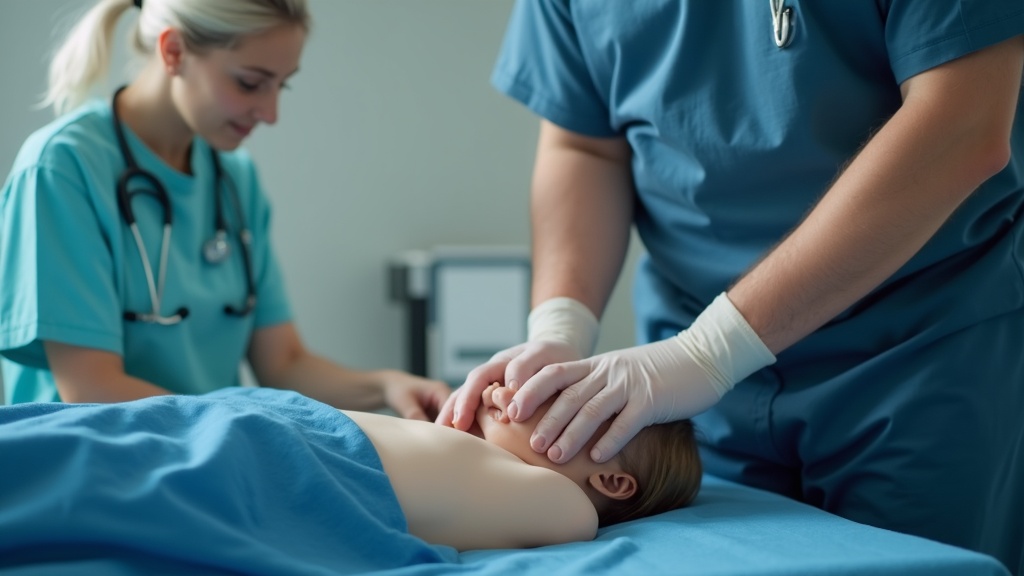
Learn why CPR training is essential for saving lives. Discover updated guidelines, key statistics, and how to get certified in this comprehensive guide.
Table of Contents
- What Is CPR Training and Why It Matters
- Updated CPR Guidelines for 2025
- How to Choose the Right CPR Training Program
- The Role of Technology and AI in CPR Training
- Questions from Our Readers
- Comparison: In-Person vs Online CPR Training
- Practical Tips for Effective CPR Training
- Final Thoughts on CPR Training
- Useful Resources
For more about Ai training tips, see learn more about ai training tips.
Key Takeaway
CPR training is a structured educational process that teaches individuals how to perform cardiopulmonary resuscitation effectively. Bystander CPR can double or triple survival chances after cardiac arrest, yet only 28 percent of U.S. adults have recent training. Mastering this skill is a civic duty and a proven lifesaver.
Market Snapshot
- Effective bystander CPR can double or triple a victim’s chance of survival from sudden cardiac arrest (American Heart Association, 2026)[1].
- Only about 28 percent of U.S. adults report having received CPR training in the past two years (American Heart Association, 2026)[1].
- The American Heart Association recommends a chest compression rate of 100 to 120 compressions per minute for adult CPR (American Heart Association, 2025)[2].
- For adult CPR, the recommended chest compression depth is at least 2 inches but not more than 2.4 inches (American Heart Association, 2025)[2].
What Is CPR Training and Why It Matters
CPR training equips ordinary people with the ability to act during a cardiac emergency. When the heart stops beating, every second counts. High-quality chest compressions and rescue breaths keep blood flowing to vital organs until professional help arrives. The American Heart Association emphasizes that everyone should learn this life-saving skill. As Comilla Sasson, MD, PhD, Vice President for Science & Innovation at the AHA, stated: “Everyone should learn CPR. This lifesaving skill can double or triple a person’s chance of survival if performed immediately after cardiac arrest.”[1]
Despite its importance, only 28 percent of adults in the U.S. have completed a CPR course within the past two years. This gap in preparedness means many cardiac arrest victims do not receive bystander help. The goal of CPR certification is to close that gap by making the skill as common as knowing how to call 911. Mastering this skill requires regular, hands-on practice to build muscle memory. Whether you take a class in person or online, the key is repetition and feedback.
CPR education also includes instruction on using an automated external defibrillator (AED). Combining chest compressions with early defibrillation dramatically improves survival rates. The 2025 guidelines from the American Heart Association and Resuscitation Council UK reinforce that training should start young and be refreshed often. In the following sections, we explore the latest standards, program selection, and how technology, including AI, is reshaping CPR training for better outcomes.
Updated CPR Guidelines for 2025
Recent updates to international CPR guidelines bring important changes for both trainers and students. The American Heart Association released its 2025 Guidelines in October 2025, along with the European Resuscitation Council and Resuscitation Council UK. These organizations now agree on a compression rate of 100 to 120 compressions per minute for adults, and a depth of at least 2 inches (5 cm) but not exceeding 2.4 inches (6 cm)[2][3].
One significant shift is the emphasis on starting CPR education early. The AHA now recommends that children begin training before age 12, while the Resuscitation Council UK suggests introducing the concept at ages 4 to 6[4]. As William H. Montgomery, MD, Chair of the AHA Emergency Cardiovascular Care Committee, explained: “High-quality CPR training is essential to improve survival from cardiac arrest, and our updated guidelines emphasize starting CPR education earlier and reinforcing it throughout life.”[2] This lifelong learning approach aims to create a generation of confident bystanders.
For infants and children, the guidelines stress minimizing interruptions in chest compressions to fewer than 10 seconds. Newborn ventilation rates should be 30 to 60 breaths per minute when respiratory support is needed[2]. These precise standards require effective training methods. The use of feedback devices during practice is now strongly encouraged, as they help learners achieve the correct rate and depth. The AHA’s 2025 Guidelines also highlight the importance of regular, structured refreshers rather than one-time certification.
Resuscitation Council UK echoed this sentiment. James Cant, CEO of RCUK, stated: “Embedding CPR training from early childhood through school and into the workplace will create a generation of lifesavers and significantly improve survival rates after cardiac arrest.”[4] The global consensus is clear: CPR instruction must evolve from an optional course into a standard part of education and workplace preparedness.
How to Choose the Right CPR Training Program
Selecting a CPR course depends on your audience, goals, and available resources. For individuals seeking certification, options range from fully in-person classes to blended online and hands-on sessions. The American Heart Association and the Red Cross offer widely recognized programs. When evaluating a program, consider the instructor’s credentials, the type of manikin used, and whether real-time feedback devices are included.
For workplaces, the 2025 guidelines recommend offering CPR education as part of annual safety training. Many employers now partner with training centers that provide on-site sessions with manikins that track compression depth and rate. This data-driven approach ensures that employees actually master the skill. Katy M. Jacques, Lead Author of the 2024 ILCOR Consensus on Education, noted: “Regular, structured CPR training and the use of feedback devices during practice are key strategies to ensure that rescuers deliver compressions with the correct rate and depth.”[5]
Online-only CPR courses can be convenient for knowledge review, but hands-on practice remains essential for muscle memory. Many reputable providers offer a hybrid model: watch videos and take a quiz online, then attend a brief in-person skills session. This blended learning is recommended by the AHA and RCUK. When choosing a program, look for one that aligns with the latest 2025 guidelines and provides a certification card valid for two years.
For healthcare providers, advanced courses like Advanced Cardiac Life Support (ACLS) and Pediatric Advanced Life Support (PALS) build on basic CPR skills. These programs require more time and include team dynamics and pharmacotherapy. Regardless of level, the core remains high-quality chest compressions. The European Resuscitation Council recommends the same 5–6 cm compression depth for adults, consistent with AHA standards[3]. Ultimately, the best program is one you complete and practice regularly.
The Role of Technology and AI in CPR Training
Technology is revolutionizing how we teach and perform CPR. Feedback-enabled manikins, smartphone apps, and virtual reality simulations now help students practice with precision. These tools provide real-time audio and visual prompts when compressions are too shallow, too slow, or too fast. The 2025 AHA Guidelines explicitly recommend that instructors use manikins with real-time feedback so students can immediately see whether their compressions meet recommended standards[2].
Artificial intelligence is taking this a step further. AI algorithms can analyze compression data over time, identify patterns, and suggest personalized drills to improve technique. Some platforms use machine learning to predict skill decay and send reminders for refresher training. These advanced AI-driven feedback systems are being integrated into both classroom and online CPR courses, making training more effective and scalable. The American Heart Association surveyed that nearly 3 in 10 U.S. adults have some CPR training, but AI tools can help close the remaining gap by making high-quality practice accessible anytime.
Beyond practice, AI is also used in emergency dispatch systems to guide bystanders through CPR over the phone. These systems can detect agonal breathing and coach the caller on compression rate. As Sarah Hildebrand from PRESTAN Products noted: “The 2025 AHA CPR guidelines make it clear that instructors should use manikins with real-time audio and visual feedback so students can immediately see whether their compressions meet the recommended standards.”[6] This feedback loop is crucial for mastering the skill quickly.
However, technology should not replace human instruction. The best approach combines expert-led courses with AI-enhanced practice tools. Organizations that invest in both human trainers and digital aids see higher retention and better patient outcomes. As the field of CPR training evolves, staying updated with these technological advances will be key for instructors and learners alike.
Questions from Our Readers
How often should I renew my CPR training?
Most certification cards, including those from the American Heart Association and Red Cross, are valid for two years. However, research shows that skills can deteriorate within months. Experts recommend taking a refresher course every 6 to 12 months, especially if you are a healthcare provider or workplace first responder. The 2025 AHA Guidelines support more frequent training sessions with feedback devices to maintain proficiency. Many online platforms offer short refresher modules that you can complete between full certification courses.
Can I learn CPR online only?
Online CPR courses provide valuable knowledge about the steps and theory, but hands-on practice is critical for developing muscle memory. The AHA and other major organizations recommend a blended learning approach: complete the cognitive portion online, then attend a brief in-person skills session with a certified instructor. Some online programs now offer loaner manikins with feedback apps, but for full certification you typically need to demonstrate skills to a trainer. Pure online training may be acceptable for review but not for initial certification.
What is the difference between hands-only CPR and conventional CPR?
Hands-only CPR involves chest compressions without rescue breaths. It is recommended for untrained bystanders or those unwilling to give mouth-to-mouth. Conventional CPR includes both compressions and ventilations (rescue breaths). The AHA advises hands-only CPR for adults who collapse suddenly in a public setting. For infants, children, and drowning victims, conventional CPR with breaths is preferred. Both techniques are covered in standard CPR training courses, and the 2025 guidelines emphasize high-quality compressions regardless of the method.
Do I need to be certified to perform CPR in an emergency?
No, you do not need certification to perform CPR in an emergency. Good Samaritan laws in most jurisdictions protect untrained bystanders who act in good faith. Certification demonstrates that you have completed a recognized training program and passed a skills assessment. It is highly recommended for workplace first aiders, lifeguards, childcare providers, and anyone who wants to be prepared. Even without a card, starting chest compressions immediately can double or triple a victim’s chance of survival.
Comparison: In-Person vs Online CPR Training
Both in-person and online CPR training have their strengths. The best choice depends on your learning style, schedule, and need for hands-on practice. The table below compares key aspects to help you decide.
| Aspect | In-Person Training | Online Training | Blended Learning |
|---|---|---|---|
| Hands-on practice | Immediate instructor feedback | None unless using a loaner manikin | Online theory + in-person skills session |
| Flexibility | Fixed schedule | Anytime, anywhere | Self-paced theory + scheduled skills check |
| Cost | Higher (instructor fees, facility) | Lower | Moderate |
| Certification acceptance | Widely accepted | Not always accepted for workplace requirements | Fully accepted |
Blended learning is increasingly recommended by health organizations as it combines the convenience of online learning with the essential hands-on practice. Technology-enhanced in-person courses with feedback manikins offer the best of both worlds for achieving mastery.
Practical Tips for Effective CPR Training
- Practice regularly with feedback devices. Use manikins that provide real-time audio or visual cues on compression depth and rate. This helps you correct mistakes immediately and build muscle memory. The 2025 guidelines from the American Heart Association specifically recommend this approach[2].
- Get comfortable with AEDs. Many CPR courses now include AED training. Practice locating and using an AED in different scenarios. Early defibrillation combined with CPR boosts survival rates significantly.
- Teach family and friends. Encourage your household to learn CPR. Use short online tutorials or invite a certified instructor for a group session. The more people trained, the safer your community.
- Keep your certification current. Mark your calendar for a refresher every two years, but consider annual practice sessions. Many organizations offer free online skill drills between certifications.
- Focus on compression rate. Keep a rhythm of 100 to 120 compressions per minute. Some people use songs like ‘Stayin’ Alive’ or ‘Baby Shark’ to maintain pace. Practice with a metronome app if available.
- Explore AI-powered tools. Look for training programs that incorporate artificial intelligence for personalized feedback. These tools can analyze your technique and provide tailored improvement plans, accelerating skill acquisition.
Final Thoughts on CPR Training
CPR training is one of the most valuable skills you can acquire. With updated 2025 guidelines emphasizing early education, feedback devices, and regular refreshers, there has never been a better time to get certified. Whether you choose an in-person class or a blended online program, the key is to practice often and stay informed. Every trained individual adds a link in the chain of survival. Start your CPR journey today.
Useful Resources
- Nearly 3 in 10 U.S. adults say they have trained in CPR, according to AHA survey. American Heart Association.
https://newsroom.heart.org/news/nearly-3-in-10-us-adults-say-they-have-trained-in-cpr-according-to-aha-survey - Highlights of the 2025 American Heart Association’s CPR and ECC Guidelines.
https://cpr.heart.org/-/media/CPR-Files/2025-documents-for-cpr-heart-edits-posting/Resuscitation-Science/252500_Hghlghts_2025ECCGuidelines.pdf - 2025 Guidelines. European Resuscitation Council.
https://cprguidelines.eu/ - Resuscitation Council UK publishes Guidelines 2025.
https://www.resus.org.uk/about-us/news-and-events/rcuk-publishes-guidelines-2025 - 2024 International Consensus on Cardiopulmonary Resuscitation and Emergency Cardiovascular Care Science With Treatment Recommendations. AHA Journals.
https://www.ahajournals.org/doi/10.1161/CIR.0000000000001288 - Understanding the 2025 AHA CPR Guidelines: What Instructors Need to Know. PRESTAN Products (YouTube).
https://www.youtube.com/watch?v=CTOjU5Q02mM