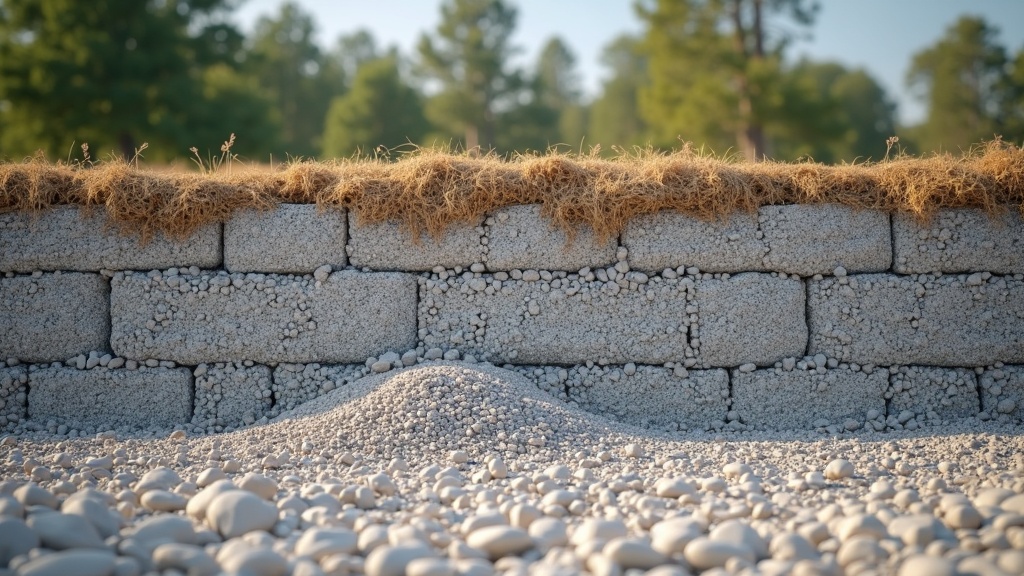
Learn how to backfill a retaining wall with gravel to ensure proper drainage and structural stability. Discover expert tips for lasting landscape support.
Table of Contents
- Preparing the Base and Trench
- Selecting the Right Aggregate Materials
- Installing Drainage and Layered Compaction
- Scaling Up: From Landscaping to Industrial Mining
- Important Questions About Backfilling a Retaining Wall with Gravel
- Comparing Backfill Methods
- Practical Tips for Success
Article Snapshot
Backfilling a retaining wall with gravel is the process of placing free-draining aggregate behind a structural barrier to manage hydrostatic pressure. This Article Snapshot highlights how proper aggregate selection and layered compaction prevent structural failure, ensuring long-term stability for both residential landscapes and large-scale industrial earthworks.
By the Numbers
- 12 inches of clean stone gravel directly behind the wall is recommended for optimal drainage (Dee Hardscape Supply, 2025)[1].
- 1 full block minimum should be buried below grade on a compacted gravel base for foundational stability (r/LandscapeArchitecture, 2024)[2].
- 4 feet is the wall height threshold where professional engineering input becomes highly recommended (Wallis Landscape, 2024)[3].
When you backfill a retaining wall with gravel, you create a vital drainage zone that protects the structure from water damage. Retaining wall construction requires careful planning to manage the immense pressure exerted by soil and water. While soil backfill might seem convenient, it retains moisture and increases hydrostatic pressure against the barrier. By choosing a gravel backfill for retaining walls, builders ensure that water flows freely away from the structure. This guide explores the essential techniques for backfilling retaining walls with gravel, from trench excavation to installing a perforated drain. Whether you are managing a small garden project or analyzing large-scale earthworks, understanding these principles is critical. We will cover material selection, compaction methods, and how these techniques compare to industrial solutions.
Preparing the Base and Trench
A successful retaining wall gravel backfill begins with a properly prepared trench and compacted base. Before placing any wall blocks, landscape contractors must excavate a trench that accommodates both the wall footprint and the necessary aggregate layers. According to industry standards, the trench should extend at least several inches beyond the wall width to provide adequate working space and foundational support (Wallis Landscape, 2024)[3].
The foundation itself relies on crushed stone rather than loose dirt. Experts emphasize the importance of this initial layer, noting, “Use compacted crushed stone as your base under the wall blocks, then use pea gravel for drainage backfill behind the wall. This combination gives” (HelloGravel Engineering Team, 2025)[4] the necessary structural support. Burying at least one full block below grade on this compacted base anchors the structure against frost heave and lateral shifting (r/LandscapeArchitecture, 2024)[2]. In colder climates, excavating below the frost line is mandatory to prevent the ground from freezing and pushing the wall upward. The compacted base must be perfectly level, as any slope in the foundation will translate into a leaning wall over time. Landscape contractors often use a laser level or string line to verify the grade of the crushed stone before laying the first course of retaining wall blocks.
Selecting the Right Aggregate Materials
Choosing the correct aggregate is the most critical step when you backfill a retaining wall with gravel. Not all stones are created equal; the goal is to use clean, open-graded materials that do not retain moisture. Hardscape specialists strongly advise against using excavated soil, as it compacts poorly and traps water. Instead, professionals recommend specific sizes, noting, “Backfill – Use #57 clean stone gravel for the 12 inches directly behind the wall. This allows water to flow downward easily rather than” (Dee Hardscape Supply Technical Team, 2025)[1] building up dangerous hydrostatic pressure.
This dedicated drainage zone is essential for wall stability. Training materials from leading manufacturers confirm that a compacted, open-graded zone directly behind the structure reduces water pressure and increases overall stability compared to using soil backfill alone (Allan Block Training Team, 2025)[5]. Avoid using materials like limestone screenings or crushed concrete that contain fine dust, as these fines will wash into the drainage pipe and cause blockages. Washed river rock is sometimes used, but its smooth, rounded edges do not interlock well under pressure. Angular crushed stone is vastly superior because the sharp edges lock together, creating a rigid matrix that provides excellent structural support while maintaining high permeability for water flow.
Installing Drainage and Layered Compaction
Effective water management requires installing a perforated drain pipe and compacting the aggregate in multiple lifts. A drainage pipe placed at the base of the wall, surrounded by clean stone, collects water and channels it away from the structure. This prevents erosion resistance failures and keeps the soil behind the wall dry. As experienced contractors point out, “Proper backfilling is crucial in ensuring the stability and long-lasting performance of your retaining wall. Use appropriate materials, such as gravel or crushed stone, and compact” (Tom Dickson, 2024)[6] the material in layers to provide sufficient support.
Compacting the backfill in layers, rather than dumping it all at once, prevents voids and settling over time. Using a mechanical plate compactor is essential for this step; hand tamping is rarely sufficient to achieve the required density. The compactor should be run over each layer multiple times, working from the wall face outward toward the native soil. This directional compaction pushes the aggregate tightly against the back of the wall, eliminating gaps where water could pool and freeze during winter months. At our agency, we analyze structural data constantly – whether that involves mapping out the clinical applications of laughter therapy for healthcare clients or evaluating physical construction metrics. In both fields, systematic layering yields the best results. Adding topsoil or sod only at the very top of the trench prevents organic matter from clogging the deep gravel backfill behind retaining wall structures (The Home Depot, 2025)[7].
Scaling Up: From Landscaping to Industrial Mining
While residential projects rely on aggregate, massive industrial excavations require advanced techniques like colloidal grout injection. In standard landscaping, gravel provides sufficient drainage and structural support. However, when dealing with deep subsurface voids, unstable mine shafts, or massive tunnel networks, loose aggregate is inadequate. Engineers in these sectors utilize specialized colloidal grout plants for mining operations to pump high-density, low-viscosity grout into deep cavities.
This industrial approach ensures complete encapsulation of rock bolts and prevents catastrophic ground subsidence. For standard surface-level projects, builders can consult federal highway administration structural guidelines to ensure their retaining wall construction meets safety codes. Understanding the difference between simple gravel backfill and industrial backfill grouting in mining helps contractors and engineers select the right stabilization method for their specific scale and geological conditions.
Important Questions About Backfilling a Retaining Wall with Gravel
Why is gravel better than soil for backfill?
Gravel is superior to soil because it is free-draining and does not retain moisture. Soil expands when wet, creating immense hydrostatic pressure that can push the wall outward or cause it to buckle. Clean stone allows water to flow directly down to the drainage pipe, protecting the structural integrity of the barrier over decades of use.
How deep should the gravel backfill zone be?
Industry guidelines generally recommend a minimum of 12 inches of clean stone gravel directly behind the wall. This 12-inch zone provides enough width for water to percolate downward efficiently without building up pressure against the retaining wall blocks. Wider zones may be required for taller walls or areas with heavy, poorly draining clay soils.
Do I need a drainage pipe behind the wall?
Yes, a perforated drain pipe is highly recommended for almost all retaining walls. Placed at the base of the gravel backfill zone, the pipe collects groundwater and channels it away from the structure. Without this pipe, water can pool at the base, leading to frost heave in cold climates and severe erosion under the foundation.
When should I hire a professional engineer?
You should consult a professional engineer if your retaining wall exceeds 4 feet in height. Taller walls face exponentially greater lateral earth pressure and require precise calculations for base depth, geogrid reinforcement, and drainage capacity. Local building codes also typically mandate engineering stamps for walls above this 4-foot threshold to ensure public safety.
Comparing Backfill Methods
Different stabilization methods serve distinct purposes depending on the scale of the project and the geological conditions. While aggregate is standard for surface landscaping, industrial voids require fluid injection techniques.
| Method | Best Application | Primary Benefit |
|---|---|---|
| Gravel Backfill | Residential and commercial landscaping | Excellent drainage and hydrostatic pressure relief |
| Soil Backfill | Low-grade, non-structural berms | Low cost, but poor drainage and high pressure risk |
| Colloidal Grouting | Deep mining shafts and tunnel networks | Complete void encapsulation and rock bolt stabilization |
Selecting the right method ensures that the stabilization technique matches the environmental and load-bearing demands of the specific site, preventing costly remediation efforts down the line.
Practical Tips for Success
Executing a flawless backfill requires attention to detail and adherence to best practices. Follow these actionable tips to ensure your project stands the test of time:
- Use Geotextile Fabric: Place a filter fabric between the native soil and the clean stone to prevent fine dirt particles from migrating into the gravel and clogging the drainage zone.
- Compact in Lifts: Never dump all the aggregate at once. Add the stone in 6-inch to 8-inch layers and compact each lift with a plate compactor to eliminate hidden voids.
- Cap the Top: Finish the top 2 to 3 inches with topsoil or sod to prevent surface water from washing directly into the gravel trench, which can cause erosion over time.
If you are a contractor looking to rank for these specialized construction terms online, leveraging advanced AI SEO services can help your business reach more local clients searching for hardscape expertise.
Wrapping Up
Understanding how to properly backfill a retaining wall with gravel is essential for any successful landscape or earthwork project. By selecting clean stone, installing a perforated drain, and compacting in layers, you protect your structure from hydrostatic pressure and premature failure. Whether you are building a small garden terrace or studying large-scale industrial stabilization, these foundational principles remain critical. For more insights on optimizing your construction business online, read our guide on construction SEO strategies.
Learn More
- Solid Ground: A Guide to Building Lasting Retaining Walls. Dee Hardscape Supply.
https://www.dehardscapesupply.com/s/stories/building-guide-retaining-walls - Backfill for a retaining wall. r/LandscapeArchitecture community (Reddit).
https://www.reddit.com/r/LandscapeArchitecture/comments/zr4kjl/backfill_for_a_retaining_wall/ - The Dos and Don’ts of Building Retaining Walls. Wallis Landscape.
https://wallislandscape.com/blog/the-dos-and-donts-of-building-retaining-walls - Pea Gravel for Retaining Wall Base: When to Use It and When to Avoid It. HelloGravel.
https://hellogravel.com/guides/pea-gravel-for-retaining-wall-base-when-to-use-it-and-when-to-avoid-it/ - Solid Ground: A Guide to Building Lasting Retaining Walls. Allan Block (via Dee Hardscape Supply).
https://www.dehardscapesupply.com/s/stories/building-guide-retaining-walls - The Dos and Don’ts of Building Retaining Walls. Wallis Landscape.
https://wallislandscape.com/blog/the-dos-and-donts-of-building-retaining-walls - How to Build a Retaining Wall. The Home Depot.
https://www.homedepot.com/c/ah/how-to-build-retaining-wall/9ba683603be9fa5395fab90d68eac94