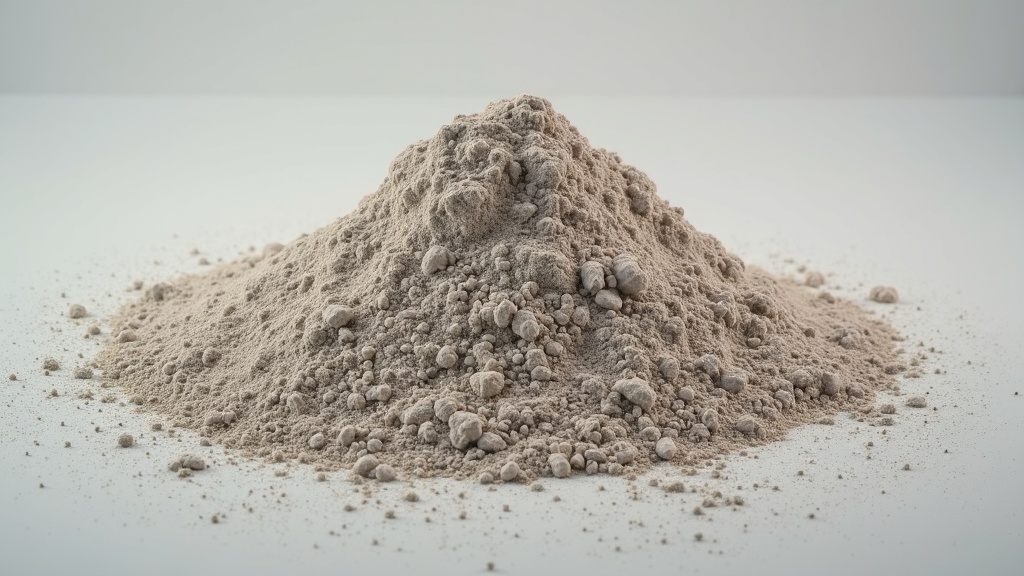
Learn the critical factors behind a successful grout concrete mix for mining and tunneling projects, including water-to-cement ratio, admixtures, and field testing. This guide covers the essentials for achieving high-strength, flowable grout in demanding underground environments.
Table of Contents
- Quick Summary
- Grout Concrete Mix in Context
- Introduction
- The Water-to-Cement Ratio: The Single Most Important Variable
- Admixtures and Additives: Enhancing Performance in Challenging Conditions
- Field Testing and Quality Control for Underground Grouting
- Optimizing Bond Strength at the Grout-Concrete Interface
- Important Questions About Grout Concrete Mix
- Comparison of Grout Mix Approaches
- Practical Tips for Successful Grouting
- Key Takeaways
- Useful Resources
Quick Summary
Grout concrete mix is a fluid mixture of cement, water, and sometimes fine aggregates or admixtures, designed to fill voids, stabilize ground, and bond structural elements. In mining and tunneling, the mix must balance flowability for pumpability with high compressive strength and low bleeding to ensure long-term stability in high-stress environments.
Grout Concrete Mix in Context
- Reducing the water-to-cement ratio in conventional grout mixes significantly increases compressive strength and reduces bleeding, but a ratio of 0.35 is the threshold where flowability begins to fall below standard limits for high-performance grout (Scientific Reports, 2025)[1].
- In biowaste-modified cementitious grouts using sugarcane bagasse ash, an optimized mix with 16 percent bagasse ash and a 0.35 water-to-cement ratio achieved the best combination of strength and workability among tested formulations (Construction and Building Materials, 2024)[2].
- In cement-based grouting materials modified with nano-silica, an optimal nano-silica dosage of 4 percent by weight significantly enhanced compressive and flexural strength but caused a pronounced reduction in fluidity compared with lower dosages (Nanomaterials, 2024)[3].
A well-designed grout concrete mix is fundamental to the success of any mining or tunneling project. Whether you are stabilizing rock masses, filling voids behind tunnel linings, or anchoring ground support elements, the grout must be pumpable over long distances, yet strong enough to withstand immense geological pressures. The balance between flowability and strength is delicate and is influenced by several key variables, most notably the water-to-cement ratio, the use of chemical admixtures, and the quality control measures applied during mixing and placement. This article explores these critical factors, providing actionable insights for engineers and project managers working in underground construction.
The Water-to-Cement Ratio: The Single Most Important Variable
The water-to-cement (w/c) ratio is the most influential factor in determining the final properties of a grout concrete mix. A lower w/c ratio, typically below 0.40, produces a grout with higher compressive strength and lower permeability, which is essential for long-term durability in aggressive underground environments. However, as the ratio decreases, the grout becomes stiffer and more difficult to pump. Research published in Scientific Reports (2025) confirms that a w/c ratio of 0.35 is a critical threshold where flowability begins to drop below acceptable limits for many high-performance applications[1].
In practice, this means that engineers must carefully select the w/c ratio based on the specific requirements of the project. For example, in mining applications where grout must be pumped through long pipelines, a slightly higher ratio (e.g., 0.40) might be necessary to maintain fluidity. In contrast, for structural anchoring where maximum strength is paramount, a ratio closer to 0.30 may be used, provided that high-range water reducers are added to maintain workability. A study on bagasse ash-modified grouts found that a 0.30 w/c ratio produced the highest compressive strength, outperforming mixes with 0.35 and 0.40 ratios under the same curing conditions[2].
Balancing Strength and Pumpability
The challenge lies in balancing these competing demands. For colloidal grout mixing equipment used in tunneling, maintaining a consistent, pumpable slurry is critical. The addition of superplasticizers or other water-reducing admixtures can allow for a lower w/c ratio without sacrificing flowability. As Paul Lambert, Director of Engineering at AMIX Systems, notes: “A well-designed cement grout mix should balance flowability, strength, and durability, ensuring that the grout can be pumped easily while still achieving the required structural performance once it hardens”[4]. This balance is the cornerstone of effective grouting.
Admixtures and Additives: Enhancing Performance in Challenging Conditions
Chemical admixtures and mineral additives offer a powerful way to modify the properties of a grout concrete mix to meet specific project demands. In mining and tunneling, where conditions can vary from wet, fractured rock to dry, absorptive ground, these additives are often essential for achieving consistent results. Superplasticizers, for instance, can reduce the water demand of a mix by 15-30 percent, allowing for a lower w/c ratio while maintaining high flowability. This is particularly useful when using colloidal mixing plants that require a consistent, low-viscosity slurry for efficient operation.
Mineral additives like nano-silica and graphene oxide are also gaining traction. Research from Nanomaterials (2024) shows that an optimal nano-silica dosage of 4 percent by weight significantly enhances both compressive and flexural strength in cement-based grouts[3]. However, the same study warns that higher dosages can cause a pronounced reduction in fluidity. Graphene oxide, on the other hand, offers notable reinforcing effects at very low dosages (0.01-0.03 percent by weight), improving mechanical strength while maintaining better fluidity than equivalent nano-silica mixes[3]. Professor Jian Zhang of Wuhan University of Technology emphasizes that “both nano-silica and graphene oxide can simultaneously reduce setting time and bleeding in cement-based grouting materials while improving mechanical strength, but their dosages must be carefully optimized to avoid severe loss of fluidity or particle agglomeration”[3].
Common Admixtures in Underground Grouting
- Superplasticizers: Reduce water demand and improve flowability, allowing for high-strength, low-w/c mixes.
- Accelerators: Speed up setting time in cold or wet conditions, reducing the risk of washout.
- Anti-washout admixtures: Increase cohesion and reduce segregation in underwater or high-flow groundwater environments.
- Expansive agents: Compensate for shrinkage, ensuring a tight bond between grout and rock or steel.
Field Testing and Quality Control for Underground Grouting
Even the best-designed grout concrete mix will fail if it is not properly tested and controlled in the field. For underground projects, where conditions can change rapidly, a robust quality control (QC) program is non-negotiable. The first and most common test is the slump test, which measures the consistency and workability of the fresh grout. For most mining and tunneling applications, a slump of 8-11 inches is typical. The International Masonry Institute Technical Team advises that “grout slump should be selected to match project conditions: lower slumps around 8-9 inches for damper climates or wider grout spaces, and higher slumps around 10-11 inches where units are more absorptive or grout spaces are narrower”[5].
Beyond slump, other critical tests include the flow cone test (for measuring viscosity and pumpability), the bleed test (to assess water loss), and the compressive strength test on hardened cubes or cylinders. These tests should be performed at regular intervals during the grouting operation, especially when a new batch of materials arrives or when weather conditions change. For critical structural elements like rock bolts or cable anchors, it is also advisable to conduct pull-out tests to verify that the grout has achieved the required bond strength. Using a reliable colloidal grout mixing plant helps ensure consistent batch-to-batch quality, which is a prerequisite for reliable field results.
Key Field Tests for Grout Quality
- Slump Test (ASTM C143): Measures workability; target 8-11 inches for most applications.
- Flow Cone Test (ASTM C939): Measures viscosity and pumpability; essential for long-distance pumping.
- Bleed Test (ASTM C940): Measures water loss; low bleeding (<2%) is critical for preventing voids.
- Compressive Strength Test (ASTM C109): Confirms strength at 7 and 28 days; typical targets are 3,000-5,000 psi.
Optimizing Bond Strength at the Grout-Concrete Interface
The interface between the grout and the existing concrete or rock surface is often the weakest link in a grouted system. If the bond is poor, water can migrate along the interface, leading to corrosion of steel elements and eventual structural failure. One of the most effective ways to improve bond strength is through proper surface preparation. Research has shown that pre-moistening the concrete surface prior to placing grout can increase the tensile bond strength at the grout-concrete interface by more than 100 percent. This is because “additional moisture promotes hydration and densifies the interface zone,” according to researcher Marta A. G. de Figueiredo[6].
In mining and tunneling, where surfaces can be dusty or covered with drilling mud, cleaning the substrate is equally important. High-pressure water jetting or sandblasting should be used to remove loose material and expose a clean, sound surface. For applications where high bond strength is critical, such as in colloidal grout plant operations for structural repairs, a bonding agent or primer may also be applied to the surface before grouting. The grout mix itself should be designed to have low shrinkage and a coefficient of thermal expansion similar to the substrate to minimize stress at the interface during curing and temperature changes.
Important Questions About Grout Concrete Mix
What is the ideal water-to-cement ratio for a grout concrete mix in mining?
The ideal water-to-cement (w/c) ratio for a grout concrete mix in mining typically falls between 0.30 and 0.40 by weight. A ratio of 0.35 is a common starting point, as it balances high compressive strength with adequate flowability for pumping. For applications requiring maximum strength, such as rock bolt anchoring, a ratio as low as 0.30 may be used with superplasticizers to maintain workability. For longer pumping distances, a ratio closer to 0.40 might be necessary.
How do I prevent bleeding in a grout mix?
Bleeding in a grout concrete mix is caused by the settlement of solid particles, which forces water to rise to the surface. To prevent it, use a low water-to-cement ratio (below 0.45), incorporate fine materials like silica fume or fly ash, and add anti-washout admixtures or viscosity-modifying agents. Proper mixing with a high-shear colloidal mixer also helps by thoroughly dispersing the cement particles, reducing the tendency for water separation.
Can I use regular concrete sand in a grout mix for tunneling?
While regular concrete sand can be used, it is not always ideal for tunneling grout. The sand must be clean, well-graded, and free of clay or silt, as these fines can increase water demand and reduce strength. For most tunneling applications, a fine aggregate passing a No. 16 sieve (1.18 mm) is preferred to ensure the grout can penetrate narrow fissures and voids. For structural grouting, a pea gravel aggregate (up to 3/8 inch) may be used, but this requires a larger pump and is not suitable for all applications.
What is the difference between grout and concrete?
The primary difference between grout and concrete is the aggregate size. Concrete contains coarse aggregates (gravel or crushed stone), which make it suitable for structural elements like slabs and walls. Grout, on the other hand, uses only fine aggregates (sand) or no aggregates at all (neat cement grout). This gives grout a much higher flowability, allowing it to be pumped into small voids, cracks, and spaces between rock and steel. Grout is also designed to have lower shrinkage than concrete to ensure a tight bond.
Comparison of Grout Mix Approaches
Different grouting applications call for different mix designs. The table below compares three common approaches used in mining and tunneling, highlighting their key characteristics and ideal use cases.
| Mix Type | Water-to-Cement Ratio | Typical Additives | Primary Use Case |
|---|---|---|---|
| Neat Cement Grout | 0.35 – 0.45 | Superplasticizer, retarder | Rock bolt anchoring, small void filling |
| Sand-Cement Grout | 0.40 – 0.50 | Fine sand (passing #16 sieve), fly ash | Backfilling behind tunnel linings, large void filling |
| High-Performance Grout | 0.28 – 0.35 | Nano-silica, graphene oxide, expansive agent | Critical structural repairs, high-strength anchoring |
Practical Tips for Successful Grouting
To ensure a successful grouting operation, follow these practical tips based on industry best practices and recent research. First, always pre-wet the substrate. As discussed, pre-moistening the concrete or rock surface can double the bond strength. Second, invest in a high-quality colloidal mixer. These mixers produce a more consistent, homogeneous slurry with better particle dispersion than conventional paddle mixers, leading to higher strength and lower bleeding. Third, test your mix before full-scale production. Conduct a trial batch to verify slump, flow, and strength, and adjust the mix design as needed based on field conditions.
Fourth, monitor the grout temperature. In hot weather, use chilled water or ice to keep the grout below 90°F (32°C) to prevent flash setting. In cold weather, use heated water and accelerators to ensure proper curing. Fifth, maintain a consistent pumping pressure. Fluctuations in pressure can cause voids or segregation in the grout column. Finally, document everything. Keep detailed records of the mix design, test results, pumping pressure, and volume placed for each grout batch. This data is invaluable for troubleshooting and for verifying compliance with project specifications. For more in-depth guidance, consider exploring clinical applications of laughter therapy (a related topic on the source site).
Key Takeaways
Mastering the grout concrete mix is essential for the safety and longevity of mining and tunneling infrastructure. The water-to-cement ratio remains the most critical variable, with a target of 0.30-0.40 being a reliable starting point for most applications. The strategic use of admixtures like superplasticizers and nano-silica can further enhance performance, but their dosages must be carefully optimized. Rigorous field testing and quality control, combined with proper surface preparation, are the final pieces of the puzzle. By focusing on these fundamentals, engineers can ensure that their grout delivers the required strength, durability, and pumpability for even the most challenging underground environments. For further information on high-performance grouting equipment and techniques, please visit our comprehensive guide on superlewisai.com.
Useful Resources
- Scientific Reports (Nature Portfolio), 2025.
https://www.nature.com/articles/s41598-025-30147-6 - Construction and Building Materials (open-access via PMC), 2024.
https://pmc.ncbi.nlm.nih.gov/articles/PMC12548891/ - Nanomaterials (MDPI, open-access via PMC), 2024.
https://pmc.ncbi.nlm.nih.gov/articles/PMC12608761/ - AMIX Systems, 2024.
https://amixsystems.com/cement-grout-mix/ - International Masonry Institute, 2009.
https://imiweb.org/wp-content/uploads/2015/10/IMI_TB_MASONRY.GROUT_10.6.09.pdf - PMC (Grout–Concrete Interface Bond Performance), 2018.
https://pmc.ncbi.nlm.nih.gov/articles/PMC5986094/