Machine Learning – A Comprehensive Guide
Machine Learning – A Comprehensive Guide
Introduction
Machine learning (ML) is a transformative technology that is reshaping industries by enabling systems to learn from data and improve over time without explicit programming. It is a subset of artificial intelligence (AI) that focuses on building algorithms that can analyze and interpret complex data patterns. As the amount of data generated continues to grow exponentially, the need for effective machine learning solutions has never been more critical. This article will delve into the fundamentals of machine learning, its benefits, applications, and best practices. By understanding ML, businesses can leverage its capabilities for better decision-making, enhanced higher search engine rankings, and improved efficiency.


Understanding machine learning
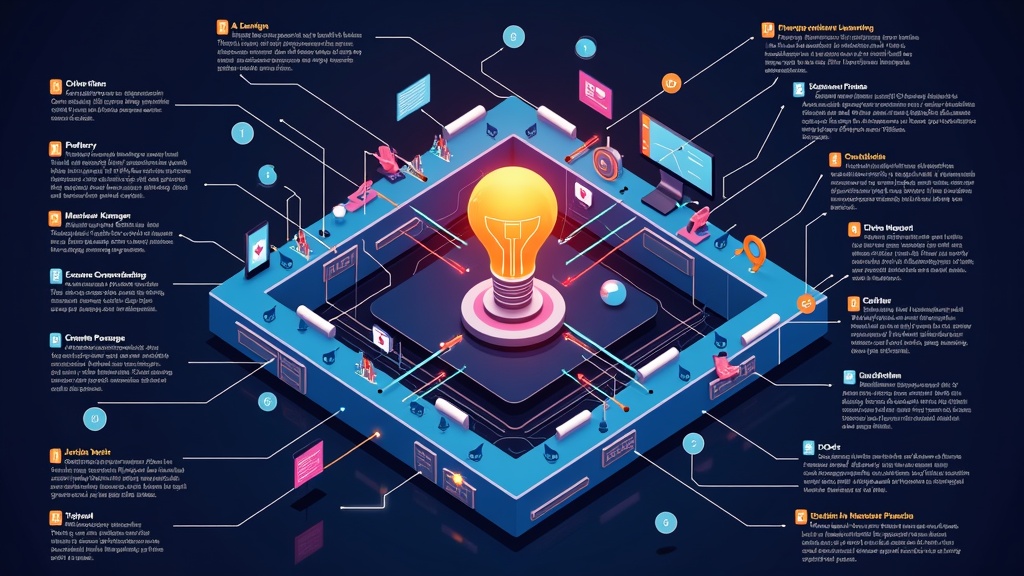
Machine learning can be categorized into three primary types: supervised learning, unsupervised learning, and reinforcement learning. In supervised learning, algorithms are trained on labeled datasets, enabling them to predict outcomes based on input data. Unsupervised learning, on the other hand, involves analyzing unlabeled data to identify hidden patterns and structures. Reinforcement learning is a unique approach where an agent learns by interacting with its environment, receiving rewards or penalties based on its actions. Understanding these categories is essential for selecting the appropriate machine learning techniques for specific tasks and challenges.
Key Benefits of machine learning
The implementation of machine learning offers numerous advantages for businesses and organizations. One significant benefit is automation; ML algorithms can automate repetitive tasks, freeing up human resources for more strategic initiatives. Additionally, machine learning enhances data analysis, allowing companies to gain deeper insights from their data, which can lead to informed decision-making. Another advantage is predictive analytics, where models can forecast trends and behaviors, helping businesses to stay ahead of the competition. Overall, machine learning can drive efficiency, reduce costs, and improve customer satisfaction through personalized experiences.
Common Applications
Machine learning is utilized across various sectors, demonstrating its versatility and effectiveness. In healthcare, ML algorithms are used for predictive analytics, disease diagnosis, and personalized treatment plans. In finance, machine learning aids in fraud detection and risk assessment. Retailers leverage ML for inventory management and customer recommendation systems. Moreover, industries such as manufacturing, automotive, and marketing are increasingly adopting machine learning to optimize processes, enhance product quality, and improve customer engagement. The breadth of ML applications showcases its potential to revolutionize traditional business models.
How to Choose the Right machine learning
Choosing the right machine learning approach involves several considerations. First, it’s crucial to clearly define the problem you aim to solve using ML. Assess the type of data available, as different algorithms require different data formats. Next, consider the complexity of the task; some problems may need advanced algorithms that can handle intricate data relationships. It’s also vital to evaluate the computational resources required, as some machine learning models can be resource-intensive. Lastly, testing multiple models and iterating based on performance can help find the most suitable solution for your specific needs.
Best Practices and Tips
To maximize the effectiveness of machine learning projects, several best practices should be followed. First, ensure data quality by cleaning and preprocessing datasets to eliminate inconsistencies and inaccuracies. Proper feature selection is another critical step; identifying significant features can enhance model performance. It’s also essential to split data into training and testing sets to evaluate the model’s accuracy effectively. Regularly updating models with new data can keep them relevant and effective. Lastly, involve stakeholders throughout the process to align ML outcomes with business objectives and user needs.
Common Mistakes to Avoid
In the pursuit of successful machine learning implementations, there are common pitfalls to avoid. One frequent mistake is overfitting, where a model learns the training data too well and performs poorly on unseen data. Another error is neglecting the importance of data preprocessing; inadequate data cleaning can lead to misleading results. Failing to interpret model outputs correctly can also derail projects, as stakeholders may misjudge the insights presented. Lastly, underestimating the need for ongoing monitoring and maintenance can result in outdated models that do not adapt to changing data patterns.
Future Trends
The future of machine learning is poised for exciting developments. One significant trend is the integration of ML with other technologies, such as the Internet of Things (IoT) and blockchain, creating smarter systems that can analyze real-time data from connected devices. Additionally, advancements in natural language processing (NLP) are expected to enhance human-computer interactions, making AI more accessible. Furthermore, as ethical considerations in AI gain prominence, developing fair and transparent machine learning models will become a priority. Lastly, the growth of automated machine learning (AutoML) tools will empower non-experts to build ML models, democratizing the technology.
Conclusion
Machine learning is a powerful tool that can offer significant advantages across various sectors. By understanding its principles, benefits, and applications, organizations can harness ML to enhance their operations and drive innovation. As technology continues to evolve, staying informed about the latest trends and best practices will be essential for maximizing the potential of machine learning. Embracing this transformative technology will not only improve website search engine ranking but also pave the way for future advancements in AI and data-driven decision-making.